
BUYER ENABLEMENT TRAINING
Win More Complex Software Deals by Aligning Sales, Technical Teams, and Buyers
Train your customer-facing teams to work as one, align around the customer’s business priorities, and create customer conversations that connect technical capabilities to business value throughout the buying journey.




















































































































When Organisations Invest in Buyer Enablement Training
Buyer enablement training becomes a priority when multiple customer-facing teams are involved in complex software opportunities and need a more consistent way to work together around the buyer.
As buying decisions involve more stakeholders, technical evaluations, and business considerations, sales and technical teams need to share customer context, align around business priorities, and guide the buyer through one connected customer conversation.
Organisations typically invest in Buyer Enablement training when they recognise situations like these:
Customer-Facing Teams Work from Different Customer Context
Sales, technical, and product teams enter customer conversations with different understandings of the customer's priorities, challenges, and desired outcomes.
Customer Conversations Focus on Product Instead of Business Value
Teams explain technical capabilities and specifications clearly, but buyers struggle to understand how the solution addresses their business priorities and desired outcomes.
Technical Teams Enter Conversations Without Enough Business Context
Technical experts are brought into opportunities before the customer's situation, priorities, and buying objectives have been clearly established.
Demos Become Technical Rather Than Customer-Focused
Demos showcase functionality effectively but don't consistently connect the solution to the customer's challenges, desired outcomes, or reasons for change.
Teams Leave Buyers to Do the Buying
Customer-facing teams focus on qualification, product capabilities, and advancing their own sales process without doing enough to help buyers understand the problem, build the case for change, align stakeholders, and decide. The result is often stalled opportunities and high "No Decision" rates.
Teams Struggle to Engage Senior Stakeholders
Customer conversations remain focused on technical or operational users, making it difficult to connect the value of the solution to broader business priorities and executive concerns.
Opportunities Lose Momentum Between Teams
Sales, Solution Consultants, Customer Success, and Product teams operate with different priorities and customer context, creating handoff gaps and inconsistent conversations that make opportunities harder to progress.
Customer Conversations Lack a Shared Approach
Without a consistent framework, different teams approach discovery, demos, and customer meetings differently, making it difficult to create one connected buying experience.
Winning Complex Software Deals Requires One Connected Customer Conversation
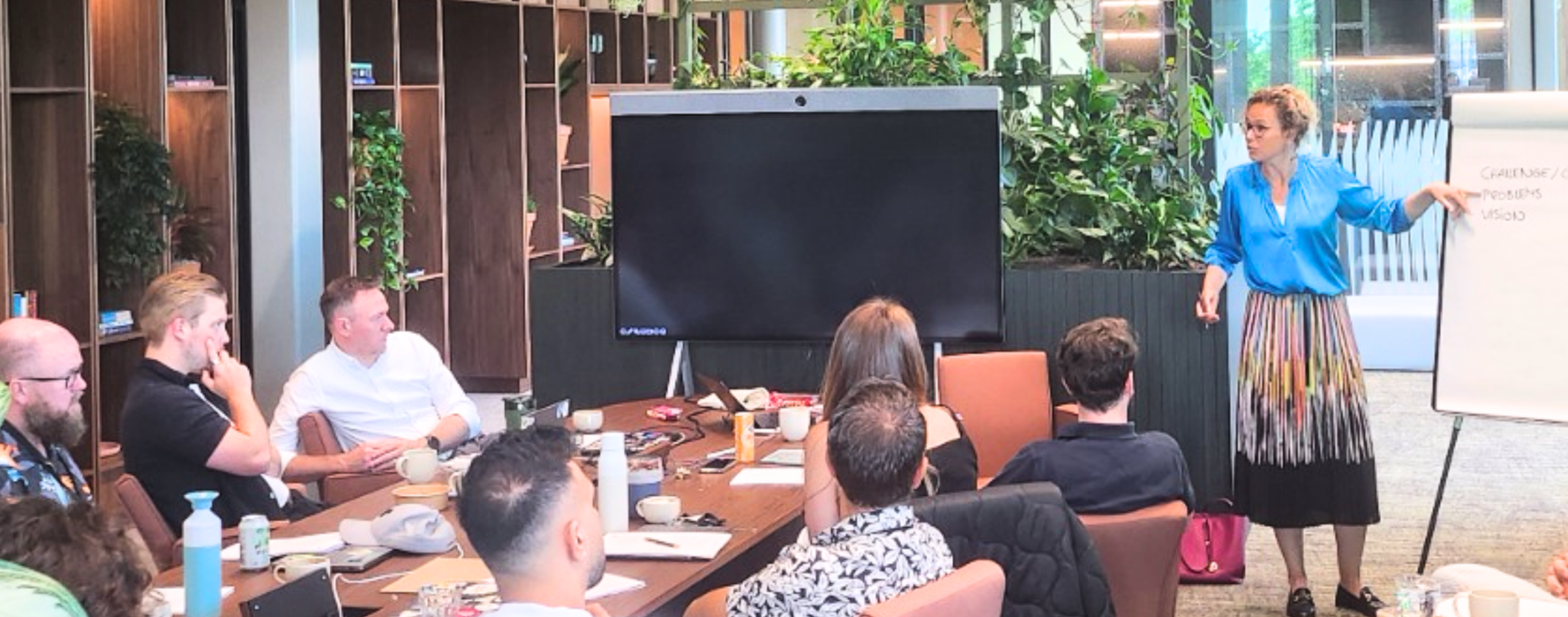
Complex software buying decisions involve multiple stakeholders, different priorities, and both business and technical considerations.
Customers need to understand how the solution addresses their business challenges, how it works technically, and what value it can create for their organisation.
That requires Sales and technical teams to work together around the same customer context, rather than leading separate conversations.
When every customer-facing team works from the same understanding of the customer, they can create more relevant conversations, demonstrate business value more clearly, and help buyers move forward with greater confidence.

Buyer Enablement Requires a Different Approach
We believe customer-facing teams should work together around the customer’s business problems, desired outcomes, and buying priorities, so every interaction moves the customer toward a confident buying decision.
That’s why our Buyer Enablement training is built around the Discovery-to-Demo® framework, helping teams share customer context, align around business problems and desired outcomes, and translate discovery into relevant, value-driven customer conversations and demos.
Why Our Buyer Enablement Training Is Different
Best for Teams Selling Complex Software
Our approach is designed for teams selling complex software where buying decisions involve multiple stakeholders, technical evaluations, and different business priorities, requiring Sales and technical teams to work together to create a clear, value-driven customer conversation.
One Shared Understanding of the Customer
Our approach aligns customer-facing teams around the customer's business challenges, priorities, desired outcomes, stakeholders, and buying objectives, creating a clear foundation for every customer conversation.
Scales Across Teams, Products, and Regions
The approach creates a common way for customer-facing teams to prepare for and lead customer conversations, helping organisations maintain consistency as they grow across products, teams, and regions.
Commercial and Technical Expertise Work Together
Sales and technical teams bring their respective expertise into one connected customer conversation, combining business understanding with technical knowledge to demonstrate relevant value.
Focused on the Value That Matters to the Customer
Teams learn to focus demonstrations on the capabilities that address the customer's specific challenges and desired outcomes, rather than trying to showcase everything the product can do.
Discovery Shapes Every Customer Conversation
The information uncovered during Discovery directly informs what the team discusses, demonstrates, and prioritises with the customer, creating more relevant and valuable conversations.
One Consistent Customer Story Across Teams
Sales and technical teams work from the same understanding of the customer's situation, ensuring that the customer hears a consistent story about their challenges, priorities, and desired outcomes.
Built Around Multiple Stakeholders
Complex software buying involves multiple stakeholders with different priorities and business concerns. Our approach helps teams adapt customer conversations to the people involved in the buying decision.
Helps Buyers See What's Possible
Customer-focused demos help buyers understand how the solution can address their challenges, what outcomes they can achieve, and why moving forward makes sense.
Inside Our Buyer Enablement Training
Explore the Buyer Enablement Training Curriculum
See what we typically cover in a Buyer Enablement engagement, from the core concepts and practical exercises to the areas we tailor around your products, buyers, sales process, and commercial objectives.
What Your Team Will Achieve with Our Buyer Enablement Training
When your customer-facing teams apply our Buyer Enablement approach consistently, they’ll create stronger alignment around the customer, deliver more relevant conversations and demos, and help buyers move forward with greater confidence. Here’s what you can expect:
Your teams will adapt conversations to different stakeholder priorities, helping business, technical, operational, and executive stakeholders understand the value of the solution.
Stronger buyer understanding and alignment can reduce repeated meetings, unnecessary demonstrations, and technical evaluations before buyers have established a clear reason to move forward.
Your teams will do more than qualify and present. They'll help buyers understand their challenges, explore what is possible, and build the confidence needed to make a decision.
Your teams will help buyers understand how the solution addresses their challenges, what outcomes they can achieve, and why moving forward makes sense.
Your organisation will have a repeatable approach for aligning teams, preparing for customer conversations, and delivering value-focused demonstrations across products, teams, and regions.
Your teams will take greater responsibility for helping buyers navigate the decision process, build internal alignment, and understand the value of moving forward.
By helping buyers build understanding, confidence, and alignment before and during the demo, your teams can create stronger progression from demo to the next stage of the buying process.
Your teams will help buyers build understanding and alignment earlier, reducing unnecessary delays and helping opportunities progress more efficiently.
Sales, technical, and other customer-facing teams will work from a shared understanding of the customer, creating more consistent conversations across opportunities.
Your teams will use customer insight to focus demonstrations on the capabilities, outcomes, and business priorities that matter most to each buyer.
Your teams will have greater visibility into what buyers understand, what still needs to be resolved, and what is required to move the opportunity forward.
What Our Clients Say
IXON Success Story
Helping IXON move from technical product demos to more structured discovery, clearer customer value, and more confident value-based selling
The Challenge
When IXON began working with Great Demo! in 2021, the company was growing rapidly and professionalising its organisation.
The sales process was being structured more clearly, and demos were an important part of that evolution.
But the team's demos were highly technical and often lengthy. Account Managers could go deep into technical details and receive complex questions they could not always answer, while there was no consistent training or methodology for delivering effective demos.
At the same time, IXON was building a more structured sales process and wanted its teams to move beyond technical product conversations toward a more focused, customer-centred approach.
By 2024, the need for stronger discovery had become even clearer.
A review of a customer conversation showed that an Account Manager could understand what the customer needed and then quickly move toward proposing a test, without fully exploring the underlying business problem or its implications.
The conversation remained largely technical.
The team faced challenges including:
- Moving too quickly toward a solution before fully understanding the customer's situation.
- Not exploring the wider implications or business impact of customer problems.
- Qualifying opportunities inconsistently.
- Engaging decision-makers too late.
- Spending too much time on individual opportunities.
- Starting conversations with engineers who then had to sell the solution internally.
- Struggling to differentiate IXON's platform when customers could potentially build the technology or hardware themselves.
- Positioning the platform as a “nice to have” rather than connecting it to clear business impact.
- Not always establishing clear next steps or urgency.
The challenge was clear:
IXON needed to help customers understand not just what the platform could do, but why it mattered to their business.
The Shift
Over time, the work expanded across both demo skills and discovery, helping IXON build a more structured approach to customer conversations.
01From Technical Demos to Purposeful Demos
The original demos were technically strong, but often too long and detailed.
The program introduced a clearer distinction between different types of demos, including Vision Generation demos designed to create early interest rather than turning every customer interaction into a full product tour.
The aim was to make demos more focused and better aligned with where the customer was in the buying process.
02From Technical Questions to Customer Discovery
Discovery became a greater focus.
Instead of moving quickly from a customer's current situation to a test or solution, the team was encouraged to explore:
- What is happening?
- Why does it matter?
- What is the impact?
- Who else is affected?
- What needs to change?
- Why does it need to change now?
The objective was to uncover the customer's pain and its wider implications before moving into the solution.
03From Product Value to Customer Value
This became particularly important because customers could often build the technology or hardware themselves.
The sales conversation therefore needed to go beyond demonstrating what IXON's platform could do.
It needed to help customers understand why choosing IXON would create value for them.
That shift helped move the conversation from product capability toward customer outcomes.
04From Selling Price to Demonstrating Value
One of the clearest changes IXON now sees is in how customers perceive the price of its software.
According to IXON, customers now perceive the price as reasonable, whereas previously it was often seen as high because the value was not clear to them.
That change is also happening internally.
Salespeople themselves have started to see the value more clearly, giving them greater confidence when making proposals.
05From Individual Skills to a Broader Sales Transformation
The work has taken place alongside a broader strategic transformation at IXON, including the introduction of a new company strategy and pricing model.
While the company cannot isolate the precise commercial contribution of the methodology from those other changes, IXON believes the approach has significantly helped with the adoption of the new strategy and pricing model.
The Impact
The most important change is not simply how IXON's salespeople demo the product.
It is how customers experience the conversation.
According to IXON:
Customers now genuinely feel heard by their salespeople and know what to expect from IXON's products.
That has helped make the value of the software clearer.
As a result, customers are now perceiving the price of the software as more reasonable, while salespeople themselves have developed a stronger understanding of the value they are proposing.
That has given them greater confidence in making proposals.
The change can be summed up simply:
Customers feel heard.
The value is clearer.
Salespeople are more confident in the proposal.
From Technology to Business Value
IXON's evolution shows what can happen when technical expertise is combined with a more structured approach to discovery and value communication.
The goal is no longer simply to show customers what the platform does.
It is to understand what the customer is trying to achieve, uncover why it matters, and make the value of the solution clear enough that both the customer and the salesperson can see why the investment makes sense.
From technical demos to meaningful conversations.
From explaining the product to uncovering the problem.
From defending the price to showing the value.
That is the shift IXON is continuing to build.